Home > Navigating OFAC’s Sudan Sanctions Program
Navigating OFAC’s Sudan Sanctions Program
The United States’ sanctions on Sudan are targeted. They are not a blanket ban. Instead, they focus squarely on individuals and entities fueling the conflict and undermining stability, primarily under Executive Order 14098. While the broad, country-wide sanctions program was officially revoked in 2017 and Sudan’s State Sponsor of Terrorism designation was rescinded on December 14, 2020, a specific, list-based sanctions regime remains very much in effect. This shift from a comprehensive program to a surgical one reflects a U.S. policy aimed at addressing the ongoing sudan crisis and human rights abuses without punishing the entire country.
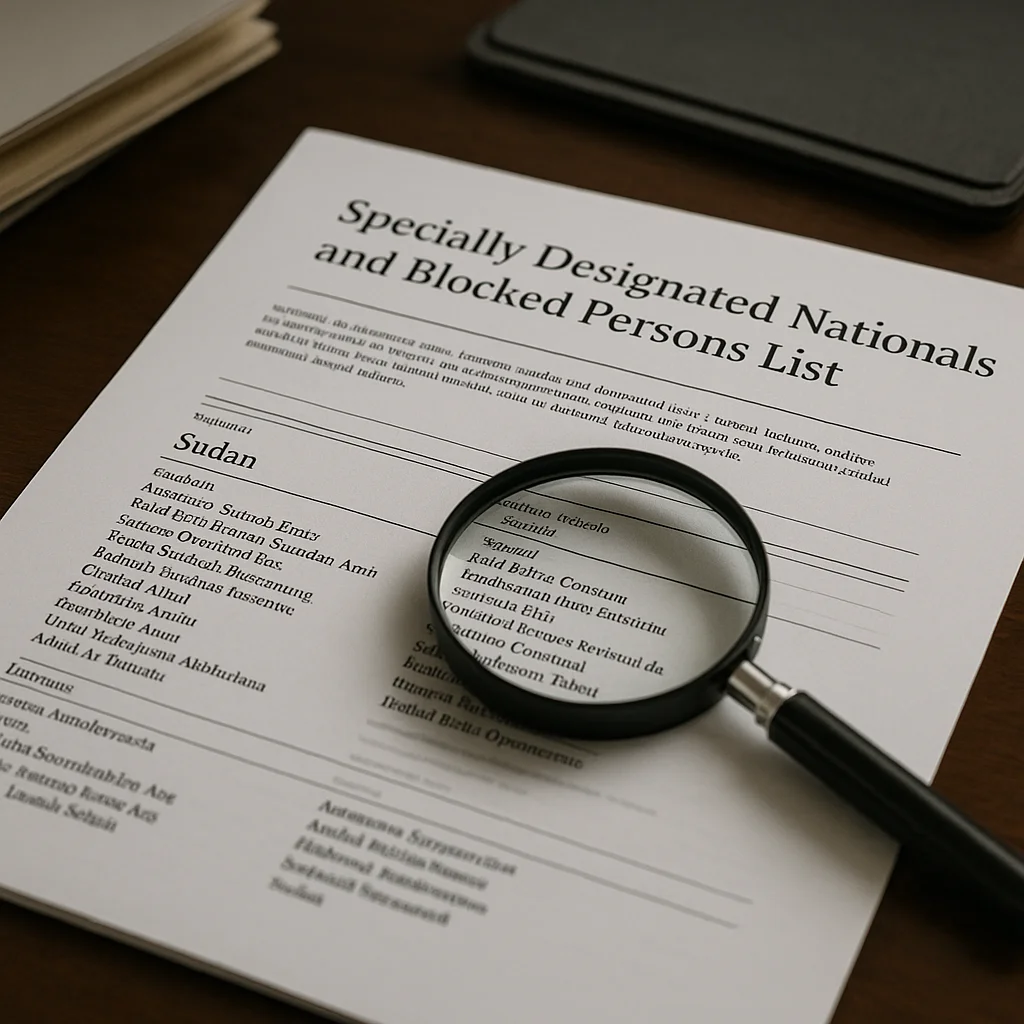
Specially Designated Nationals and Blocked Persons (SDN) List – A list published by the Office of Foreign Assets Control (OFAC) identifying individuals, entities, and vessels with whom U.S. persons are generally prohibited from dealing. Any property or interests in property of these parties that come within U.S. jurisdiction are considered `blocked property`.
This article breaks down the current U.S. economic sanctions programs on Sudan and explains what they mean for you, whether you’re an individual or a business with ties to the region.
What is the Current Status of U.S. Sanctions on Sudan?
As of 2026, the main legal hammer for Sudan sanctions is Executive Order (E.O.) 14098, issued on May 4, 2023. This order targets people involved in actions that threaten Sudan’s peace, security, or stability. It’s a modern framework, completely distinct from the old, now-defunct comprehensive sanctions that once created a near-total embargo.
Today’s legal foundation rests on several key instruments:
- Executive Order 14098: Gives the authority to sanction those responsible for the ongoing
sudan conflict. - The Darfur Peace and Accountability Act of 2006: Provides a long-standing statutory basis for sanctions connected to the
Darfur sudan genocide. - International Emergency Economic Powers Act (IEEPA): This is the broad presidential authority used to impose economic sanctions when there are unusual and extraordinary threats to U.S. national security.
You must understand that Sudan is no longer subject to the sweeping prohibitions that defined the old program under 31 C.F.R. part 538. Rescinding Sudan’s State Sponsor of Terrorism (SST) designation on December 14, 2020, was a landmark change, lifting a massive layer of financial and trade restrictions.
Is Sudan a sanctioned country by OFAC?
No. Sudan is not subject to comprehensive, country-wide sanctions by OFAC. The U.S. now maintains a targeted, list-based program. This means the prohibitions apply *only* to transactions with the specific individuals and entities named on OFAC’s Specially Designated Nationals and Blocked Persons (SDN) List under this sanctions authority. It does not apply to the entire country, its government, or its people.
Were the Sudan sanctions lifted?
Yes and no. The broad, country-wide economic sanctions against Sudan were largely revoked by Executive Order 13761 in 2017. However, targeted sanctions tied to the Darfur conflict and the current sudan civil war are still active and have even been expanded. The newest authority, E.O. 14098, was implemented in 2023, proving that sanctions pressure continues, just in a more focused, modern way.
Who is Targeted by the Current Sudan Sanctions?
The sanctions zero in on individuals and entities designated by the Treasury’s Office of Foreign Assets Control (OFAC) for their role in the conflict. For instance, on June 1, 2023, OFAC designated four key companies under E.O. 14098. Why? They were generating revenue for the warring factions and directly contributing to the country’s instability.
The criteria for being added to the list under E.O. 14098 are specific. A person or entity can be designated for being responsible for, or complicit in:
- Actions that undermine democratic processes.
- Threats to the peace, security, or stability of Sudan.
- Any attacks on civilians, a category which explicitly includes sexual and gender-based violence.
- Obstructing the delivery of humanitarian assistance.
When a person or entity gets designated, all of their property and interests in property within U.S. jurisdiction are blocked. Instantly. This means U.S. persons are generally prohibited from all dealings with them. Businesses must perform due diligence to ensure they don’t transact with these parties, which almost always requires using a professional sanctions screening service.
What is the OFAC Sanctions List?
There isn’t one single “OFAC Sanctions List.” It’s a collection of several lists. The most important one is the Specially Designated Nationals and Blocked Persons (SDN) List, which is the cornerstone of most U.S. sanctions programs. It identifies the individuals, entities, and vessels with whom U.S. persons are forbidden to do business. OFAC’s official Sanctions List Search tool is the primary and most reliable way to check if a counterparty is designated.
What Are the Key Prohibitions and Obligations?
The core obligation is simple: if a U.S. person comes into possession or control of property belonging to a designated party, they must block (freeze) it. Immediately. That blocked property must then be reported to OFAC within 10 business days. Missing this deadline can trigger an inquiry from OFAC, turning a routine blocking into a potential enforcement matter.
The main prohibitions under the Sudan sanctions program are clear:
- You cannot make any contribution or provide funds, goods, or services to, or for the benefit of, any person on the SDN List.
- You cannot receive any contribution or provision of funds, goods, or services from any such person.
- Any transaction that tries to evade or avoid these rules is also prohibited.
This distinction is critical: the rules apply to dealings with list-based designations, not to general trade with or investment in Sudan, as long as no sanctioned parties are involved in the transaction.
How Can You Comply or Seek Authorisation for Transactions?
For a transaction that would otherwise be prohibited, you might get authorization from OFAC through two main channels: a general license or a specific license.
- General Licenses (GLs): These are pre-approved authorizations published by OFAC for a particular category of transactions. You don’t need to apply. For the Sudan program, OFAC has issued GLs to permit certain humanitarian activities, ensuring aid can still reach civilians.
- Specific Licenses: A specific license is a written permission slip from OFAC issued to a particular person or company, allowing a transaction that is normally forbidden. You must apply directly to OFAC’s online portal. These are reviewed case-by-case, and whether you get one depends entirely on current U.S. foreign policy and national security interests.
Robust due diligence and screening are the absolute bedrock of compliance. If you discover a potential violation, you can consider filing a voluntary self-disclosure (VSD) with OFAC. A VSD isn’t a get-out-of-jail-free card, but it can be a powerful mitigating factor in any enforcement action. If you think you may have violated sanctions, it is essential to consult with legal counsel specializing in OFAC matters to navigate the VSD process.
What is the Sudan Sanctions summary?
In short, the U.S. sanctions on Sudan are a targeted regime under Executive Order 14098. The program blocks the assets of, and forbids transactions with, specific individuals and entities designated for destabilizing the country. This is not a comprehensive embargo. Compliance hinges on screening all transaction partners against the SDN List and other OFAC sanctions lists. The old, broader sanctions program was revoked, and Sudan’s State Sponsor of Terrorism designation was rescinded in 2020.
What Are the Penalties for Violating Sudan Sanctions?
Penalties for violating the International Emergency Economic Powers Act (IEEPA), the law that underpins most sanctions programs, are severe. They can be applied on a strict liability basis, meaning you can be penalized even if you didn’t know you were breaking the law.
- Civil Penalties: As of 2026, civil fines can exceed $368,000 or twice the value of the underlying transaction—whichever is greater—for each violation.
- Criminal Penalties: For willful violations, the consequences can be catastrophic: fines up to $1 million and imprisonment for up to 20 years.
OFAC handles the investigations and imposes civil penalties. The U.S. Department of Justice prosecutes criminal cases. These laws apply to any U.S. person, no matter where they are in the world, and to any person who causes a violation to happen within the United States.
⚠️ Time is critical — every day matters
Get a free case assessment
Our team specialises in cases with an international element. We review applicable treaties, assess risks, and prepare an action plan.
🔒 Confidential · Response within 24h · No obligation
| Designation criterion | Targeted area |
|---|---|
| Actions that undermine democratic processes. | democratic processes |
| Threats to the peace, security, or stability of Sudan. | peace, security, or stability of Sudan |
| Any attacks on civilians | civilians |
| Obstructing the delivery of humanitarian assistance. | humanitarian assistance |
Frequently Asked Questions
What is OFAC sanctions List?
OFAC maintains several sanctions lists, not just one. The most famous is the Specially Designated Nationals and Blocked Persons (SDN) List. These lists name the people, companies, and even ships targeted by U.S. sanctions. If a name is on the SDN List, U.S. persons are generally prohibited from dealing with them. You can check names against these lists using OFAC’s free Sanctions List Search tool.
Is Sudan a sanctioned country ofac?
No, not in the old sense. Sudan is not under a comprehensive, country-wide OFAC sanction. The current sanctions are “list-based.” This means they only forbid dealings with specific individuals and entities designated for their role in the sudan conflict, human rights abuses, or for undermining stability. General trade with non-designated parties in Sudan is largely permitted.
What is Sudan Sanctions summary?
The U.S. sanctions program on Sudan targets specific bad actors who undermine peace, operating primarily under Executive Order 14098. U.S. persons must freeze the assets of and avoid all business with parties designated on the SDN List. The previous, broad country-wide embargo was ended, and Sudan is no longer designated as a State Sponsor of Terrorism.