NS-MBS List: What Are Menu-Based Sanctions?

The Non-SDN Menu-Based Sanctions (NS-MBS) List is a public tool from the U.S. Department of the Treasury’s Office of Foreign Assets Control (OFAC). Think of it as a scalpel, not a sledgehammer. It identifies foreign persons subject to “menu-based” sanctions, which are a specific, tailored set of prohibitions less severe than the full asset freeze that comes with a Specially Designated Nationals (SDN) List designation. Its goal is to give U.S. persons clarity on which specific, non-blocking sanctions apply to an individual or entity, as determined on a case-by-case basis under laws like the Countering America’s Adversaries Through Sanctions Act (CAATSA).
What Makes Menu-Based Sanctions Different from an SDN Listing?
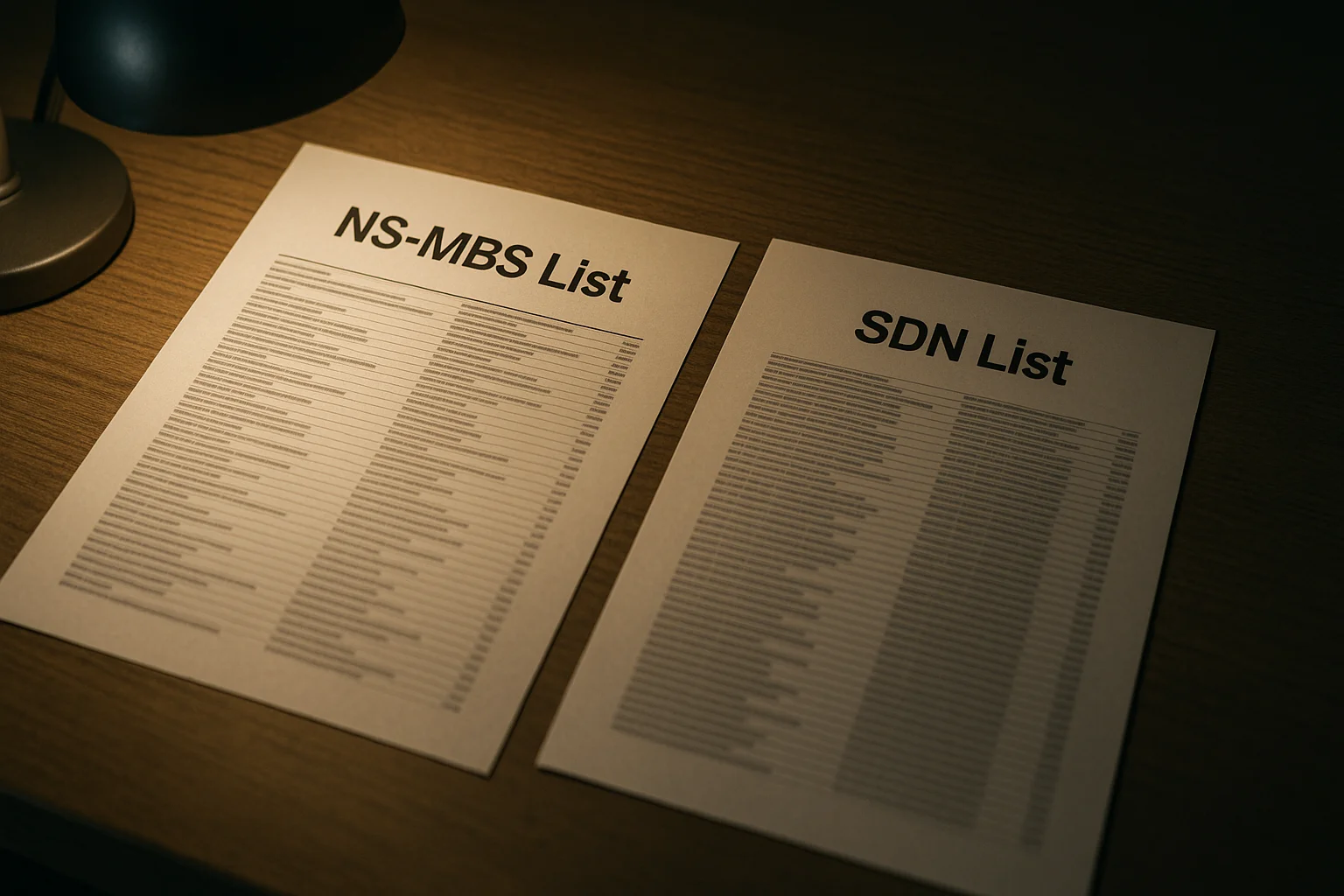
The primary distinction is the type of restriction imposed. An SDN listing is OFAC’s most restrictive tool. It triggers “full blocking sanctions”—a near-total asset freeze where all property and interests in property of the listed person under U.S. jurisdiction are blocked, and U.S. persons are prohibited from almost all dealings with them.
By contrast, the NS-MBS List involves non-blocking menu-based sanctions. This means only the specific prohibitions selected from a statutory “menu” and spelled out in the entity’s NS-MBS entry are forbidden. Any other transactions might still be permissible — though comprehensive due diligence is critical for anyone even considering such dealings, since the specific menu applied can vary significantly from one designee to another. OFAC introduced the NS-MBS List on December 14, 2020, consolidating these complex sanctions into one accessible reference. For compliance teams, this means your screening software must now be sophisticated enough to parse not just a name match, but the specific prohibitions tied to that name, which may require updating internal procedures and training that predate this list.
What is the difference between SDN and non-SDN Lists?
The difference boils down to the severity and scope of the prohibitions. Understanding this is vital for proper risk assessment.
SDN List (Specially Designated Nationals and Blocked Persons): This is OFAC’s flagship list. A designation leads to a comprehensive asset freeze. Period. All property in U.S. jurisdiction is blocked, and U.S. persons are generally forbidden from any transactions with the party. The consequences are severe and immediate.
Non-SDN Lists (like NS-MBS, SSI, NS-CMIC): These lists apply targeted, specific prohibitions. The restrictions only apply to certain activities, like providing specific types of financing or services. For instance, some entities face restrictions on new debt but not on other forms of trade. The prohibitions are detailed in the specific list entry rather than applied as a blanket ban — but that also means reading the entry carefully matters: assuming “non-SDN” automatically means “safe to proceed” is itself a common compliance mistake.
What does “Non-SDN List” mean?
“Non-SDN List” is a general term for any OFAC sanctions list that does not impose full blocking sanctions. Instead, these lists apply more nuanced and specific restrictions. Key examples are the NS-MBS List, the Sectoral Sanctions Identifications (SSI) List, and the Non-SDN Chinese Military-Industrial Complex Companies (NS-CMIC) List. When a screening check returns a match on a non-SDN list, your first step isn’t to block the transaction. It’s to read the specific prohibitions associated with that entity, because assuming a total ban is often a costly mistake.
What Legal Authority Allows for Menu-Based Sanctions?
Menu-based sanctions aren’t arbitrary. They are enabled by specific statutes from the U.S. Congress and implemented through Executive Orders signed by the President. OFAC cites several primary legal authorities for the NS-MBS List.
The main drivers include:
- Countering America’s Adversaries Through Sanctions Act (CAATSA): This is a cornerstone of menu-based sanctions. Specifically, Section 235 of CAATSA requires the President to impose at least five of twelve possible sanctions from a statutory menu on persons found to be engaged in certain activities with Iran’s military or ballistic missile programmes.
- Ukraine Freedom Support Act of 2014: As amended by CAATSA, this act also authorises menu-based sanctions, particularly concerning Russia’s activities in the energy sector.
- Executive Order (E.O.) 13849: This order provides a key mechanism for implementing the sanctions described in CAATSA, delegating authority to the U.S. Department of the Treasury and directing its action.
How Are Entities Added to the NS-MBS List?
An entity gets added to the NS-MBS list only after a formal U.S. government determination that it engaged in conduct specified in a sanctions statute.
The process generally follows these steps:
- Determination: A U.S. government agency, typically the Department of State or Treasury, concludes that a foreign entity has met the criteria for sanctions under a law like CAATSA. A potential pitfall here is that this determination is based on intelligence that is often not public, making it difficult for the target to pre-emptively challenge the underlying evidence.
- Sanction Selection: The implementing agency then selects the required number of sanctions from the statute’s “menu.” Under CAATSA Section 235, at least five of twelve possible sanctions must be chosen. These can range from a ban on U.S. Export-Import Bank assistance to prohibitions on U.S. government procurement contracts.
- Publication: OFAC officially designates the person or entity, publishing their name and the specific, applicable sanctions in the Federal Register.
- Listing: The entity is then added to the NS-MBS List. This data is also integrated into OFAC’s Consolidated Sanctions List and becomes searchable via the “Sanctions List Search” tool.
While a person can petition for removal from the list, this is a complex administrative and legal process — similar in structure to petitioning for removal from the SDN List, though governed by its own statutory criteria under CAATSA. Given how fact-dependent these petitions are, this is generally where getting professional guidance early matters most.
How Can I Check the NS-MBS List and What Do I Look For?
U.S. persons should check the NS-MBS List using OFAC’s free online tools. Our guide on how to check a person or company against the OFAC sanctions list covers this process in detail. In short, there are two main routes:
- Sanctions List Search: This is the most user-friendly tool for checking a specific name against all of OFAC’s sanctions lists, including the NS-MBS List.
- Consolidated Sanctions List Data: For businesses that need to conduct a high volume of checks, OFAC provides downloadable data files for automated screening. The NS-MBS list data is included in these files and is identified by the official list code
[MBS]. A common error here is failing to update these files frequently, as a stale list is a major compliance risk.
When you get a positive match on the NS-MBS List, the entry will specify the exact prohibitions. These are not standard blurbs — they are pulled directly from the statutory menu and might include bans on loans, foreign exchange dealings, or property transactions. It is vital to read the restrictions on a record-by-record basis to understand your compliance obligations fully.
How Does the NS-MBS List Relate to Other Non-SDN Lists?
The NS-MBS List is just one of several targeted, non-SDN sanctions lists that OFAC maintains. Each list has its own distinct purpose, legal basis, and set of prohibitions. Telling them apart is key to effective compliance.
What is the OFAC Non-SDN Chinese Military-Industrial Complex Companies List (NS-CMIC List)?
The NS-CMIC List identifies companies determined to be operating in the defence and related materiel sector or the surveillance technology sector of the People’s Republic of China, or owned/controlled by such entities. Its primary sanction is different from the NS-MBS list: it restricts U.S. persons from purchasing or selling any publicly traded securities of these companies. The prohibitions are narrowly focused on investment activities.
What about the Sectoral Sanctions Identifications (SSI) List?
The SSI List targets specific sectors of the Russian economy, mainly finance and energy, with narrow restrictions typically centered on new debt or equity — a much more confined scope than the broader “menu” of possible restrictions applicable under NS-MBS. See our full guide to the SSI List for the complete breakdown, including its four directives.
⚠️ Time is critical — every day matters
Get a free case assessment
Our team specialises in cases with an international element. We review applicable treaties, assess risks, and prepare an action plan.
🔒 Confidential · Response within 24h · No obligation
Frequently Asked Questions
What is Ns plc list?
This term doesn’t correspond to an official OFAC sanctions list. It is likely a typographical error for “NS-MBS List” or another non-SDN list. Always verify names and list identifiers against OFAC’s official Sanctions List Search tool to ensure accuracy in your compliance screening.
What is the OFAC non-SDN Chinese Military-Industrial Complex Companies List?
This is the official name for the NS-CMIC List. It identifies companies with ties to China’s military-industrial complex. The primary sanction prohibits U.S. persons from transacting in the publicly traded securities of these designated companies, which is different from the menu-based sanctions on the NS-MBS list.
What is NS-CMIC List?
The NS-CMIC List is the abbreviation for the Non-SDN Chinese Military-Industrial Complex Companies List. It is a separate list from the NS-MBS List and carries different, securities-focused prohibitions related to specific Chinese companies.
What does “Non-SDN List” mean?
“Non-SDN List” refers to any sanctions list published by OFAC that imposes prohibitions that are less severe or more specific than the complete asset-blocking sanctions of the SDN List. This category includes the NS-MBS, SSI, and NS-CMIC lists, among others.