Frozen Assets? Here’s What You Need to Know
August 2026
So, what are frozen assets? They are funds, property, or accounts that a person retains legal title to but cannot access, move, or transact with. This action, known as an asset freeze, is typically imposed because a government agency, court, or international sanctions body has designated the owner—or the underlying transaction—as connected to a sanctions violation, money laundering, or terrorism financing.
Under OFAC’s regulations, “blocked” is the formal legal term (see 31 C.F.R. § 501.201, Blocking of Assets); “frozen” is the informal term the public and media use for the same thing.
The freeze assets meaning is rooted in legal enforcement. An asset freezing action typically results from suspected violations of economic sanctions, anti-money laundering (AML) regulations, or national security measures. Essentially, any frozen money or property is restricted by a government authority to halt illicit financial flows.
These actions are enforced by bodies like the U.S. Office of Foreign Assets Control (OFAC) or the EU Council, under legal frameworks such as the International Emergency Economic Powers Act (IEEPA). Blocking is a critical tool for preventing illegal activities, ensuring compliance with international law, and maintaining financial stability.

Risks: Why You Cannot Ignore Frozen Assets
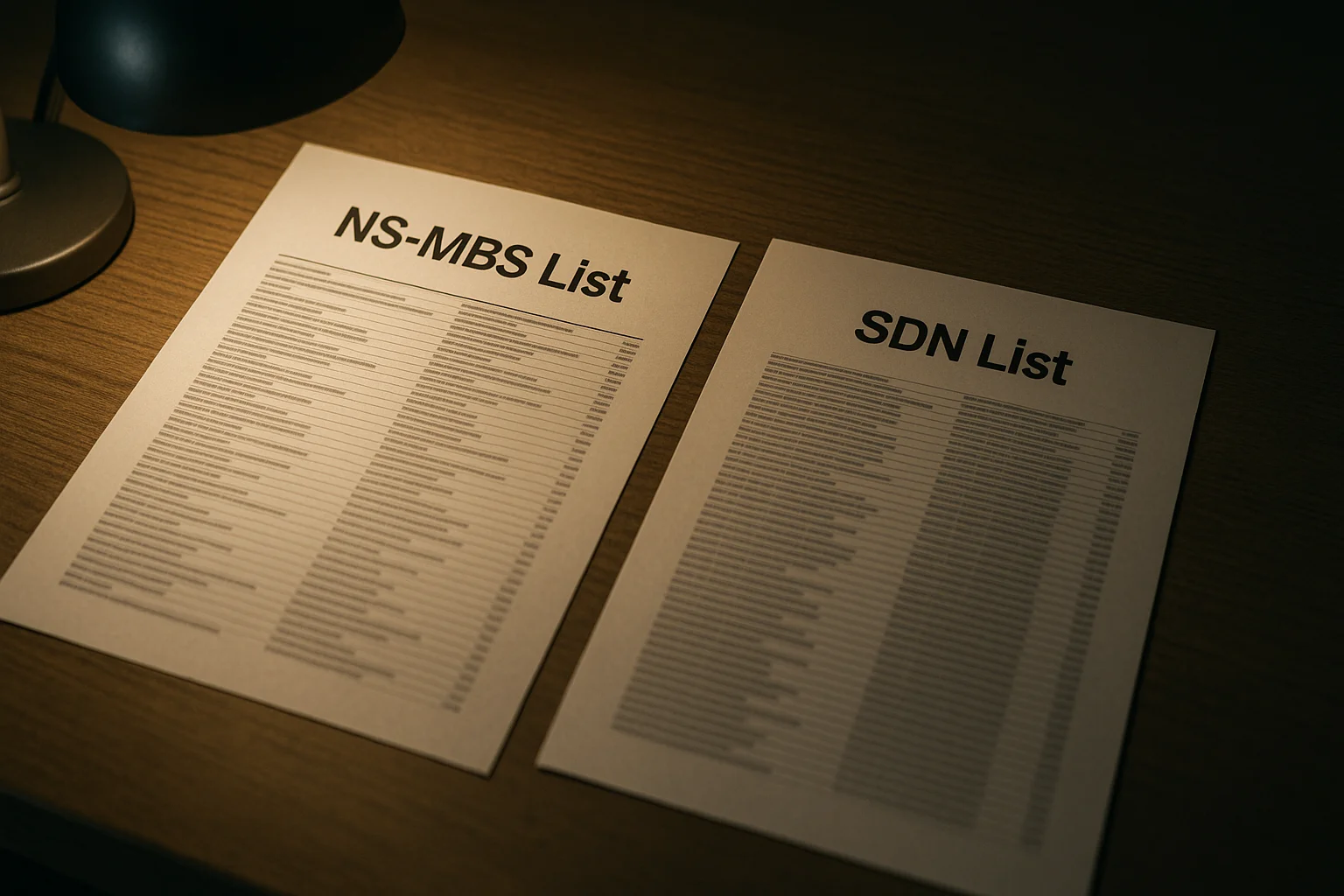
For both individuals and corporate entities, understanding the legal nuances of blocked assets is crucial. Ignoring sanctions laws can lead to designation on the OFAC SDN List (Specially Designated Nationals).
Consequences include:
- Total Asset Block: Immediate freezing of all US-jurisdiction assets.
- The 50% Rule: Any entity owned 50% or more by a blocked person is automatically blocked.
- Civil & Criminal Liability: Civil fines under IEEPA can reach $377,700 per violation (adjusted annually for inflation) or twice the value of the underlying transaction, whichever is greater. Criminal violations can carry fines up to $1,000,000 and up to 20 years imprisonment.
- Operational Paralysis: Inability to conduct USD transactions or use SWIFT.
Many executives believe that OFAC is only a problem for large banks, oil giants, or companies operating in “hot” regions. This is a common misconception. In reality, OFAC sanctions can affect even the seemingly most “harmless” types of businesses:
- Supply chains: Do you import goods from abroad? From components to finished products, any company in your supply chain (manufacturer, logistics service provider, customs broker) may come under sanctions. If this happens, your shipments may be delayed, and payments blocked. Your business could simply come to a halt.
- International payments: Any cross-border payment, even for ordinary goods, goes through a complex system of banks. If your counterparty’s bank, or even a correspondent bank in the chain, is found to be violating sanctions, your payment may be frozen. The funds will simply “hang,” and you will lose control over them.
- Interaction with clients and partners: Before concluding any international deal, whether it is a wholesale sale or a partnership, it is extremely important to check if your counterparty is on sanctions lists. Selling goods or providing services to a sanctioned person, even unknowingly, can lead to serious legal problems.
Not All OFAC Penalties Are the Same: Statutory Maximums by Program
OFAC enforces sanctions under five different statutes, and each carries its own maximum civil penalty per violation:
- IEEPA (most modern sanctions programs — Russia, Iran, most country programs): greater of $377,700 or 2x the transaction value;
- TWEA (Trading with the Enemy Act — legacy Cuba-related designations): $111,308;
- FNKDA (Foreign Narcotics Kingpin Designation Act): $1,876,699;
- AEDPA (Antiterrorism and Effective Death Penalty Act): greater of $99,703 or 2x the amount at issue;
- CDTA (Clean Diamond Trade Act): $17,062.
Which statute applies depends on which sanctions program your matter falls under — this materially changes your exposure calculation.
OFAC’s enforcement discretion — including how penalties are calculated, what counts as “egregious” conduct, and the effect of voluntary self-disclosure — is governed by the Economic Sanctions Enforcement Guidelines at 31 C.F.R. Part 501, Appendix A.
What happens to frozen money, property, and bank accounts under OFAC?
Once assets are frozen, the owner loses the ability to manage them in any practical sense: no transactions, no withdrawals, no transfer of ownership. The funds themselves typically continue to earn interest at a commercially reasonable rate while blocked, since OFAC requires the holding institution to place them in a blocked interest-bearing account. A freeze typically signals that the government suspects a connection to money laundering, terrorism financing, sanctions evasion, or another prohibited activity — though false positives from name-matching during bank screening are also common.
Most countries adopt laws at the national level in this regard in order to support, defend, prevent, protect, and comply with international obligations. In the European Union, for example, Regulation No. 2580/2001 establishes measures for blocking and freezing assets in support of the fight against terrorism. The United States has passed a law that expands the powers of government agencies to prevent, defend, protect, and combat terrorism financing and money laundering, including asset freezing.
Asset and asset-freezing orders can be temporary or permanent. The duration of either an asset freezing order or a debt order depends on the outcomes of investigations and court decisions. During a freeze, assets may be under the control of government agencies or appointed administrators. In some cases, assets can be confiscated and turned over to the state treasury by court order. This is particularly important and relevant for complex financial structures, for example, where the assets of individuals or a trust wallet are frozen, potentially leading to prolonged legal disputes.
The Asset Freeze Process: From Order to Resolution
Most countries adopt laws at the national level in this regard in order to support, defend, prevent, protect, and comply with international obligations. In the European Union, for example, Regulation No. 2580/2001 establishes measures for blocking and freezing assets in support of the fight against terrorism. The United States has passed a law that expands the powers of government agencies to prevent, defend, protect, and combat terrorism financing and money laundering, including asset freezing.
Asset and asset-freezing orders can be temporary or permanent. The duration of either an asset freezing order or a debt order depends on the outcomes of investigations and court decisions. During a freeze, assets may be under the control of government agencies or appointed administrators. In some cases, assets can be confiscated and turned over to the state treasury by court order. This is particularly important and relevant for complex financial structures, for example, where the assets of individuals or a trust wallet are frozen, potentially leading to prolonged legal disputes.
Frozen Cryptocurrency and Sanctioned Wallets
OFAC increasingly designates specific cryptocurrency wallet addresses directly on the SDN List, identified through blockchain analytics rather than traditional bank account numbers. Once an address is designated, U.S. persons and exchanges are prohibited from processing transactions involving that wallet, and any exchange holding those funds must block (not seize) them, the same way a bank blocks a frozen account. Tracing ownership and untangling commingled funds in a wallet or trust structure typically requires forensic blockchain analysis alongside legal counsel.
A Financial Institution’s Blocking Obligations
When a financial institution identifies a match against the SDN List, it must:
- Block, not reject, the transaction — funds are placed in a blocked, interest-bearing account, not returned to the sender.
- Report the block to OFAC within 10 business days of the blocking action.
- File an Annual Report of Blocked Property each September 30 for as long as the assets remain blocked.
- Retain records for at least 5 years under 31 C.F.R. § 501.601–602.
- Not disclose the block to the customer beyond what’s legally required — this is why account holders often only learn about a freeze after receiving a subpoena or seeing funds disappear from a statement.
Institutions submit blocking reports and the Annual Report of Blocked Property through OFAC’s Reporting System (OFAC RRS), not by mail or generic correspondence — using the wrong channel is itself treated as a compliance failure.
What happens to ownership when assets are frozen?
When assets are frozen, legal title remains with the owner — you still legally own the property. What is suspended is your ability to exercise that ownership: you cannot transfer, withdraw, export, or otherwise deal in the funds without OFAC authorization. A blocked person is an individual or entity that OFAC has itself designated — appearing on the SDN List or a comparable list. Blocked assets are the property or funds that must be blocked because a blocked person has an interest in them — and that property can belong to someone who is not themselves a blocked person. You can hold blocked assets without being a blocked person yourself. This block survives the death of the owner — the property passes into a blocked estate, and heirs generally need OFAC authorization before any distribution can occur.
What common mistakes can lead to receiving a summons?
Failing to comply with laws and regulatory acts is typically the victim or primary victim or reason for receiving and paying an OFAC summons court, or paying a court amount. Common mistakes include:
- Failing to conduct comprehensive due diligence on counterparties. Not thoroughly vetting clients, partners, or counterparties can lead to collaboration with individuals who are under sanctions or involved in illegal activities;
- Violation of anti-money laundering (AML) requirements. Failure to report suspicious transactions that exceed established thresholds, or breaches of internal control procedures, can be considered as non-compliance with AML laws;
- Ignoring sanction lists. Failing to update information on sanction lists, such as the OFAC SDN list or the EU consolidated list, can lead to unintentional violations of sanction regimes;
- Inadequate control over exports and imports. Violating export control laws, including the transfer of dual-use technologies or goods without the appropriate licenses, can lead to serious legal consequences;
- Untrained staff. The lack of training for employees on compliance requirements and regulatory acts increases the risk of errors and violations;
- Failure to comply with reporting and document retention requirements. Non-compliance with documentation standards can complicate the audit process and raise suspicions of information concealment;
- Participation in dubious financial schemes. Engaging in transactions with opaque ownership structures or offshore companies without a clear business purpose can raise suspicions of money laundering or tax evasion.
To protect assets and mitigate risks, it’s recommended to implement effective compliance programs that meet international standards. These programs serve to help ensure adherence to requirements and avoid issues such as third parties being unable to access funds, for example, when access to assets in a particular wallet is frozen.
Regular training for bank staff on sanctions issues helps to increase awareness. This can help reduce and prevent the risk of non-compliance, allowing the bank and you to reduce and avoid asset freezing, and blocking of trust wallet assets, transaction blocks, and more.
Using specialized business tools, for example, software for monitoring transactions and vetting counterparties makes it easier for businesses to comply with regulatory requirements. Consulting with experts—legal and business compliance specialists—can provide businesses with valuable advice on complex issues of international law and regulatory requirements, for example, helping businesses avoid situations where a business’ bank account gets frozen.
Top triggers for OFAC enforcement:
- Poor Due Diligence: Failing to screen the ultimate beneficial owners (UBOs) of a counterparty against the SDN List.
- Ignoring “Sectoral” Sanctions: Violating complex restrictions (SSI List) involving debt or equity of energy/defense sectors.
- Export Control Violations: Shipping dual-use goods (EAR99 vs. controlled) without BIS licenses.
- Inadequate AML Controls: Failing to file Suspicious Activity Reports (SARs) for transactions exceeding $5,000 or $10,000 thresholds.
- “Stripping” Wire Transfers: Removing references to sanctioned countries (e.g., Iran, Syria) from SWIFT messages to bypass bank filters. This is a criminal offense.
When Export Controls (BIS/EAR) Overlap With Frozen Assets
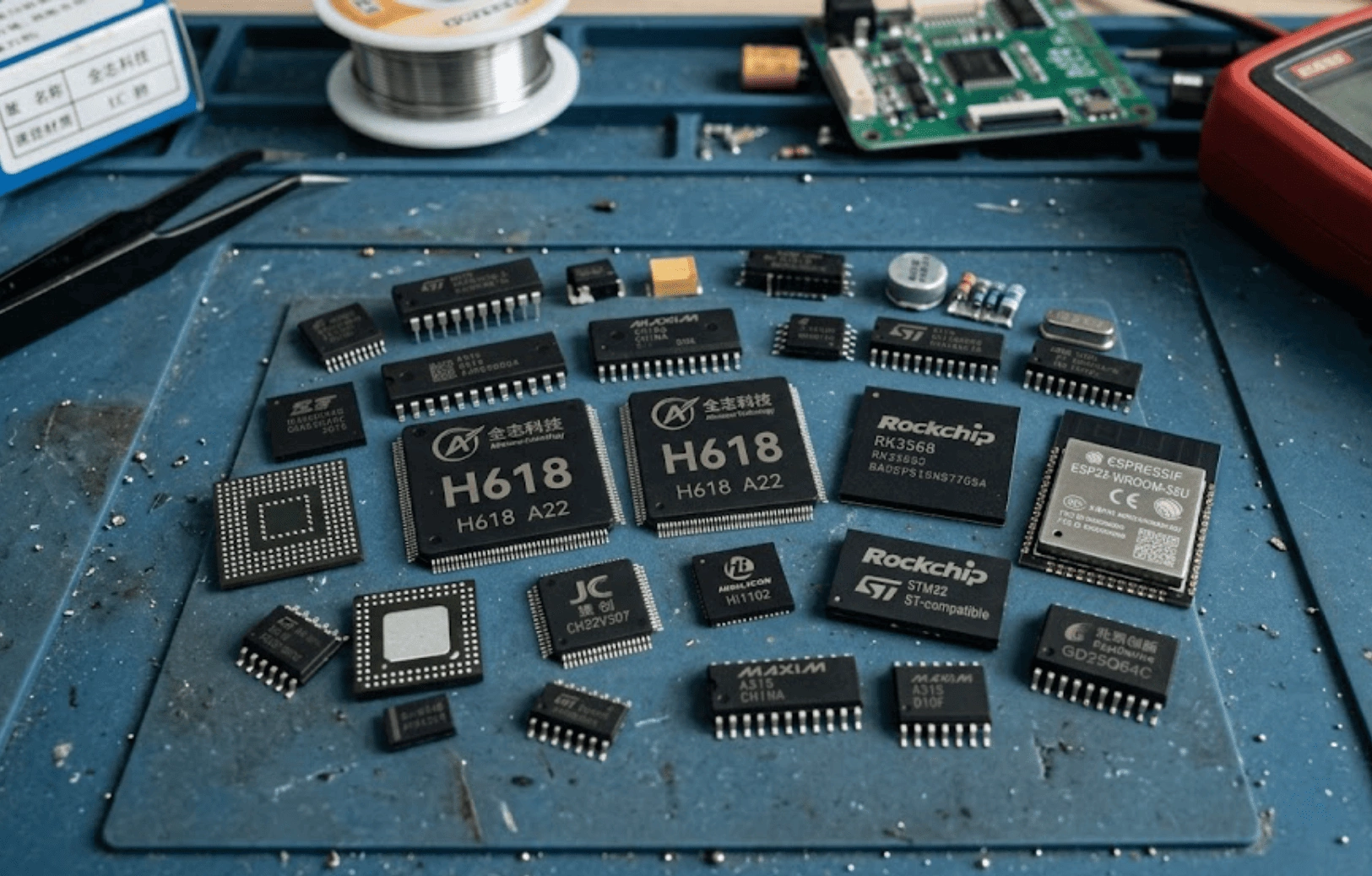
Asset freezes under OFAC are separate from export licensing under the Commerce Department’s Bureau of Industry and Security (BIS) and the Export Administration Regulations (EAR). If your frozen-assets matter involves goods, technology, or dual-use items (classified under an ECCN rather than EAR99), you may need a BIS license in addition to any OFAC license — clearing one does not clear the other.
Can Subpoenas, Investigations, or Violations by OFAC Affect a Person’s Immigration Status?
This depends on the circumstances of the case, notes our lawyer. If the investigation is related to involvement in illegal activities, providing support or financial resources to sanctioned individuals or organizations, or narcotics trafficking, it may affect a person’s immigration status. Each case requires an individual analysis of all the facts.
Subpoenas or investigations by OFAC can seriously affect the ability to obtain a visa, green card, or citizenship. For example, violations of sanctions legislation may lead to the following consequences:
- Refusal to issue a visa. If a person is suspected of circumventing sanctions, financing prohibited activities, or managing blocked accounts, the authorities may deny entry to the USA.
- Restriction on obtaining a green card. Participation in schemes related to money laundering or supporting individuals from the SDN list makes a person ineligible for permanent residency.
- Deprivation of benefits during naturalization. In the case of active investigations or proven violations of OFAC sanctions, the naturalization process may be suspended or completely rejected.
- Risk of deportation. If a person is already residing in the USA, but their actions are related to violations of sanctions programs or managing blocked accounts, this may serve as grounds for deportation.
OFAC pays attention to entities involved in any suspicions related to sanctions evasion, financial fraud, narcotics trafficking, or support of prohibited organizations.
To protect your rights and minimize risk — especially if your matter touches both sanctions compliance and immigration status — consult a lawyer with experience in both areas. They can assess how an OFAC investigation may affect your bank accounts and advise on the right defense strategy.
How can a lawyer help with frozen assets?
Our lawyers can assist in the process of freezing assets and unfreezing frozen assets, by providing legal advice and preparing all necessary documents. We also represent clients before the court and relevant sanctioning authorities and can challenge unlawful asset freezes in court. Additionally, an attorney can help file applications for licenses to use the frozen assets. Our legal team offers guidance and support on complying with sanction requirements, helping clients avoid future violations.
Frequently Asked Questions
What is a blocked asset under OFAC rules?
A blocked asset is any property or funds in which a blocked person — someone appearing on the SDN List or a comparable OFAC list — holds an interest. The original owner keeps legal title, but until OFAC issues a specific license, they cannot transfer, withdraw, access, or otherwise deal with the asset in any way. A person or company can end up holding a blocked asset without being a blocked person themselves, simply because a designated party has an interest in the same funds or property.
What is a blocked account?
A blocked account is a bank or financial account where withdrawals, transfers, and other transactions are frozen because the account holder — or a related party — is designated on OFAC’s SDN List or otherwise subject to sanctions. The funds are not seized or confiscated; they remain the property of the account holder but sit inaccessible until OFAC grants a license or the underlying sanction is lifted.
True or false: when a blocked account is established to hold an entity’s frozen assets, the funds must be placed in an interest-bearing account?
True. Under OFAC regulations, once frozen assets are placed into a blocked account, the holding institution is generally required to deposit the funds into an interest-bearing account, so the value is preserved for the owner while the blockage remains in effect.
Does a country or entity whose property is blocked by OFAC still own the assets?
Yes. Blocking does not transfer ownership. A country, company, or individual whose property is blocked by OFAC retains legal title to the assets but cannot use, transfer, or dispose of them without OFAC’s specific authorization — typically in the form of a specific or general license.
What does “blocked funds” or “blocked property” mean under OFAC rules?
Blocked funds and blocked property refer to any money, securities, real estate, or other assets in which a sanctioned person or entity has an interest, and which a U.S. person or financial institution must freeze immediately upon identifying the connection. The term covers bank deposits as well as physical and intangible property.
What is the difference between “blocked persons” and “blocked assets”?
Blocked persons are the individuals, companies, or organizations designated by OFAC — most commonly through the SDN List — with whom U.S. persons are prohibited from transacting. Blocked assets are the actual funds or property connected to those persons that must be frozen as a result of the designation.
What must a financial institution do if it identifies a match to an entity on the OFAC SDN list?
If an institution identifies a match to a party on the SDN List, it must block or freeze the transaction immediately and report it to OFAC within the required timeframe — generally 10 business days. The institution cannot simply cancel or return the funds; the assets must be placed into a blocked account pending further action.
How long must a financial institution retain records of blocked property?
Records related to blocked property must generally be retained for at least five years from the date the property is unblocked, in accordance with OFAC recordkeeping requirements. Institutions should keep full documentation of the blocking, any communications with OFAC, and the eventual resolution.
Can a blocked account be overridden for a medical emergency or tuition payment?
Not without authorization. An account block cannot be overridden simply because funds are needed for a medical emergency, college tuition, or a change in marital status. Any release of blocked funds — regardless of the reason — requires a specific license from OFAC.
If an account is blocked, are transfers still allowed even though withdrawals are prohibited?
No. A blocked account restricts both withdrawals and transfers. Once an account is frozen under OFAC sanctions, no movement of the funds is permitted in any form without OFAC’s specific authorization.
What activities or relationships are considered prohibited under OFAC rules?
Prohibited activity generally includes any dealings with individuals or entities designated by OFAC, the UN Security Council, or other sanctioning bodies, as well as accounts where the holder’s identity cannot be verified or required documentation cannot be obtained due to the customer’s non-cooperation.
Why do asset freezes often cause long delays in accessing funds?
Asset access delays happen because OFAC reviews each blocked-funds case individually, and there is no fixed timeline for a decision. Between preparing documentation, submitting the application, and awaiting OFAC’s response, clients can face delays ranging from several weeks to over a year, depending on the complexity of the case.